

Technology for reliable wind power in cold climates
Wind energy is one of the fastest growing renewable energy sources in the world. As the global energy transition accelerates, wind farms are being developed in increasingly diverse and demanding environments.
Many of the world’s strongest wind resources are located in regions where icing conditions occur regularly. While these areas offer significant energy potential, ice formation on wind turbines remains a persistent operational challenge.
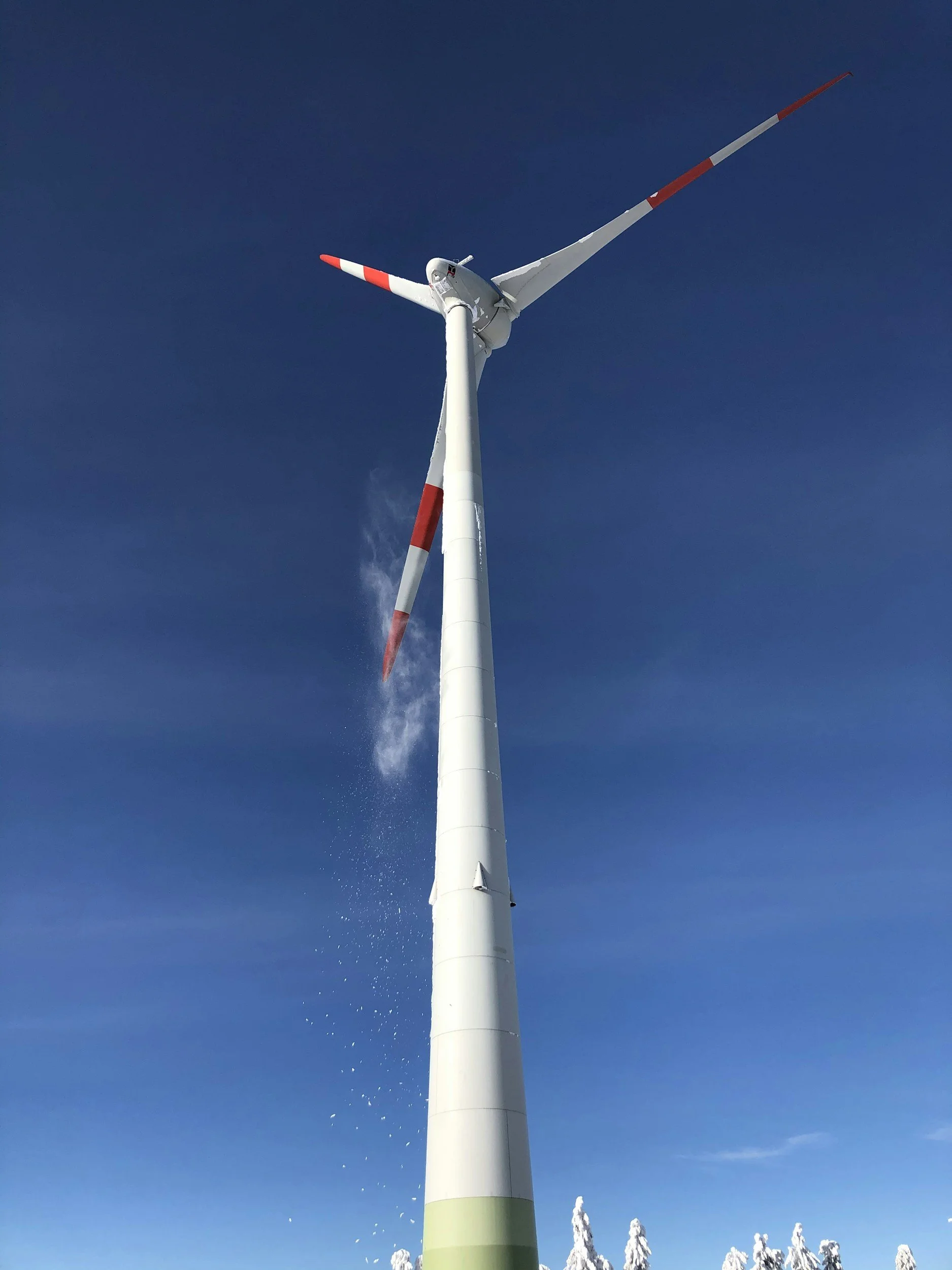
A challenge for turbine performance
Ice accumulation on turbine blades reduces aerodynamic efficiency and can significantly impact energy production. In severe conditions turbines may shut down entirely to prevent damage or safety risks.
For wind farm operators, icing represents both a technical and economic challenge.
Improving turbine performance in icing conditions therefore represents a significant opportunity to increase the reliability and efficiency of wind power in cold climates.
Developing a new solution
Icepulse is developing a technology designed to detect and remove ice formation on wind turbines in a controlled and efficient way.
The company’s goal is to help wind farms maintain stable production under demanding weather conditions by improving turbine uptime and reducing production losses.

Supporting the next phase of wind energy
As wind power expands globally, operational reliability becomes increasingly important. Technologies that address real-world operational challenges will play a critical role in ensuring that renewable energy systems perform as expected.
By targeting one of the industry’s key challenges in cold climates, Icepulse aims to contribute to a more reliable and efficient global wind energy sector.